The Bazalgette’s and Life in Arthur Road, Wimbledon
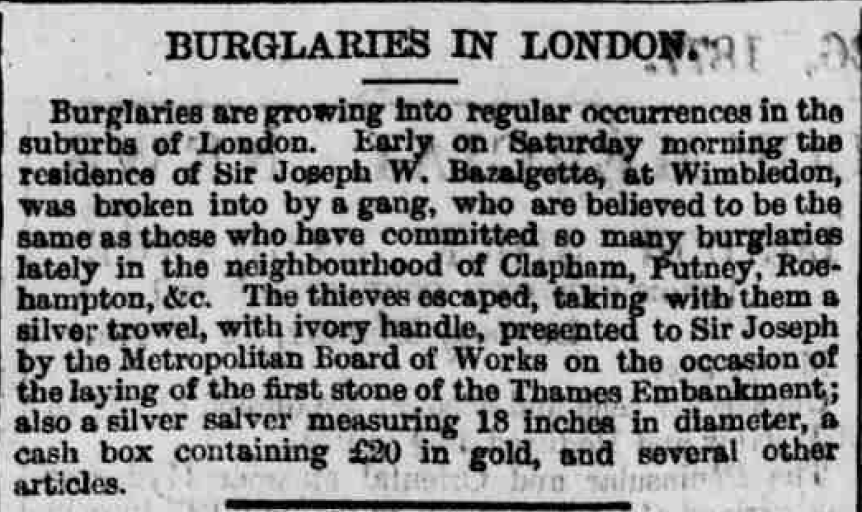
Volunteer Delia Cattell delves into the history of the Bazalgette home in Arthur Road, Wimbledon as part of our project, Sir Joseph Bazalgette & the Great Stink of London. Read Delia’s blog to learn about St. Mary’s and the tale of a robbery in 1877….
The newly-built house opposite St Mary’s church was named St Mary’s by Joseph and Maria Bazalgette as they moved in with their children and servants. It was a substantial property initially set in 20 acres of land. It needed to be big; along with Joseph and Maria and their adult children there were 4 living-in servants plus outdoor gardener and coachman. The house was described as “a beautiful abode” when put up for action after Maria’s death, “with extensive views in a secluded yet cheerful and bracing position, surrounded by lovely old grounds and meadow, stabling for 5 horses and a coachman’s dwelling over.” Being new-built the house would have included the latest devices for comfort and security including the “patent locks” on the ground floor windows.
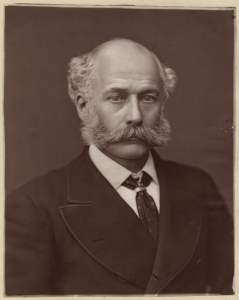
In November 1877 they suffered a burglary as did several of their neighbours around this time. The intruders gained entry to the Bazalgette’s house on the ground floor through the drawing room window. The “patent lock” to this window was broken, so the burglars got in without too much difficulty – and while the family were at home. Not a sound of the intrusion was heard. Only when the servants got up to start work the following morning was the burglary discovered.
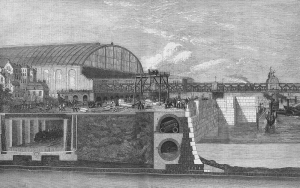
The burglars took an odd selection of booty, including a silver trowel with an ivory handle bearing the inscription “Presented by the Metropolitan Board of Works to J.W. Bazalgette Esq in commemoration of the laying of the first stone of the Thames Embankment.” This was said to be highly valued by Sir Joseph; and, one would have thought, far too distinctive to find an illicit buyer. They also carried off a large salver, a silver ink-stand, an overcoat, four photographs, and a japanned cash box containing about £20 (worth about £2000 now.) Was it widely known in the neighbourhood that large sums of cash were held in the house? Was it an inside job? The cash box was in a secretaire with 18 or 20 drawers: and apparently only the one containing the cash box had been opened. The robbers were not traced. (Surrey Advertiser 1.12.1877)
However, this was not the only incidence of the household’s possessions being an attraction to thieves. In 1897, though, culprits were caught and brought to court. Late on an August evening in 1897 Thomas Norris, the Bazalgette’s groom, found a lad skulking under trees in the enclosed garden. The boy said he had been put over the fence by some other boys and told to steal apples – and he had a number of apples on him. The groom took him off to the police station, where he was charged with being in possession of a quantity of growing apples belonging to the now-widowed Lady Bazalgette, value one shilling. Lady Bazalgette refused to consent to the boy (James Smith of Somers Town) receiving 6 birch strokes from an officer of the court, however – which would have been the end of the matter – but insisted on charges being preferred, claiming he had not only taken apples but also damaged her trees.
Only a month earlier, in July, three “scrumpers” were charged with unlawful possession of apples taken from Lady Bazalgette’s orchard. And that same month on a Sunday afternoon another four boys were found to have broken into the orchard in Lake Road (thus the other side of the grounds from the Arthur Road frontage) and taking between them 372 apples, as well as breaking a tree. Charles Wright, the Bazalgette’s gardener, discovered the damage and identified the apples. It is not recorded what happened to the culprits, but easy to understand why the 80-year-old Lady Bazalgette’s patience may have been wearing a little thin by August. (Wimbledon News 24.7.1897 & 7.8.1897 and Wimbledon & District Gazette 31.7.1897)