Infiltration vs Invitation: Rethinking Richard Burton’s ‘Hajj’
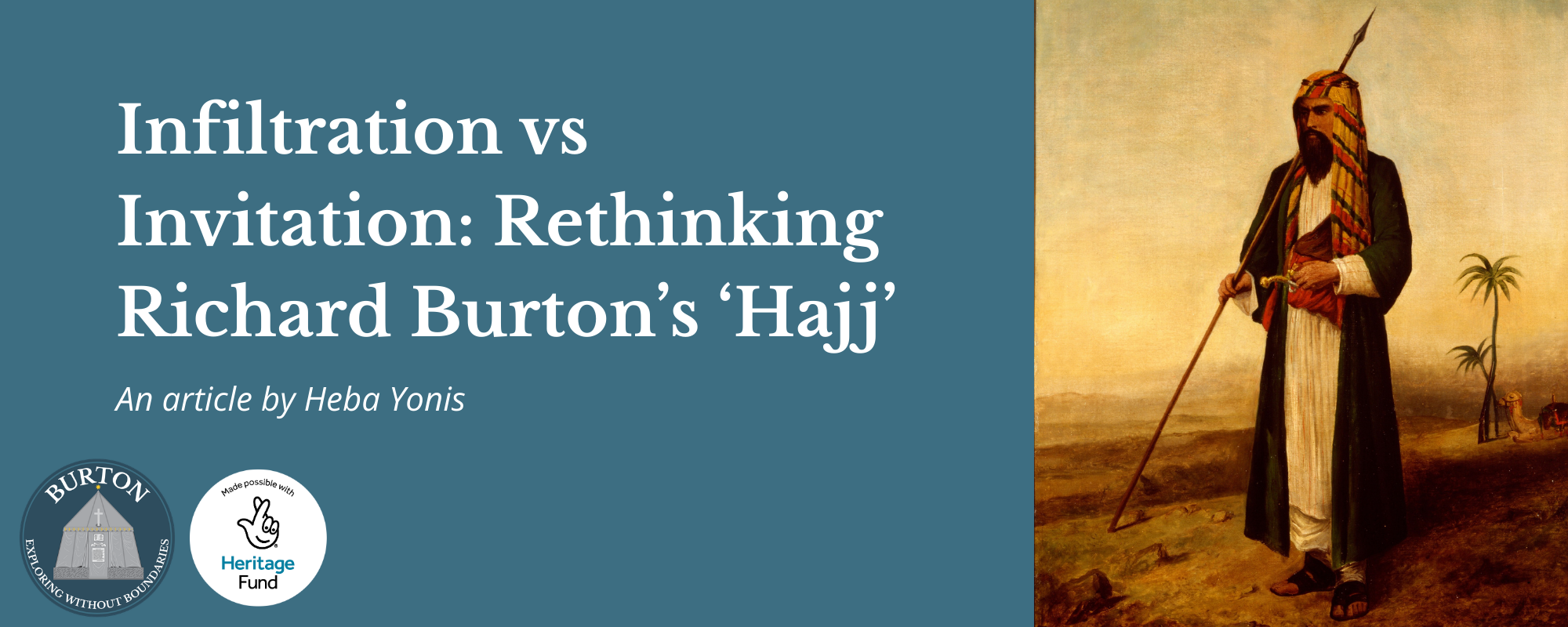
What does it mean to perform a pilgrimage you do not believe in? In 1853, Richard Burton crossed the threshold of Makkah in secret, hoping to reveal a world he thought hidden from Europe. Yet his story of infiltration stands in stark contrast to those penned by Muslim pilgrims —one defined not by deception but by invitation, not by fear but by longing, not by loathing but by love. This blog post explores that tension and asks what Burton truly saw, and what he simply could not.
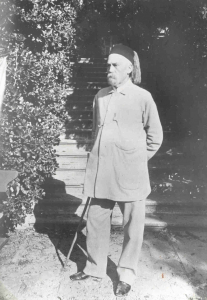
In 1853, the Victorian explorer and British spy, Richard Francis Burton entered Makkah in disguise. Dressed as a dervish and possessing an exceptional command of Arabic, Persian, and Hindustani, Burton managed to do what few Europeans had attempted. His account, A Personal Narrative of a Pilgrimage to Al‑Madinah and Meccah, became the first substantial English‑language description of the Muslim pilgrimage forbidden to non-Muslims. For many Victorian readers, it opened a window onto a world they otherwise knew almost nothing about and made Burton famous as one of Britain’s most daring explorers.
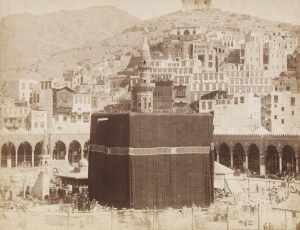
But a closer look at Burton’s narrative reveals something deeper. Burton may have walked the same paths as Muslim pilgrims, slept under the same desert skies, and stood in the same sacred spaces—but he did not experience the Hajj as a pilgrim. He experienced it as an infiltrator. And that distinction reshapes everything we learn from his account.
The Orientalist Journey: Burton’s Imperial Frame
Burton’s Hajj narrative must be understood within the context of 19th‑century Orientalism. As an officer of the British East India Company and an emerging Orientalist scholar, Burton belonged to a European intellectual tradition that sought to study the East in order to understand and better dominate it.
To his credit, Burton was not a typical Orientalist. He was eccentric, brilliant, and deeply invested in immersion. He learned languages obsessively and was known for pushing beyond the boundaries of conventional scholarship.
Yet, no matter how unconventional his methods, Burton remained anchored to an imperial worldview. Scholars describe him as struggling between his individualist nature and his identification with Britain as a colonial power. His pilgrimage begins not with humility, but with a long‑standing European frustration: non‑Muslims were bar red from entering Makkah and Madinah. He quotes earlier writers lamenting that this sacred geography was inaccessible to Europeans.
Burton presents himself as the one who finally breaks that barrier—not by invitation, but by infiltration. His narrative is therefore less a contribution to Muslim knowledge and more a triumph over it, portraying the Hajj not as a sacred trust but as a secret finally unlocked.
Mimicry, Mastery, and the Performance of Devotion
Throughout his account, Burton relishes the moments where his disguise succeeds. He takes pride in correcting Muslim scholars, in diagnosing fellow pilgrims’ ailments, and in passing as a member of various ethnic groups. At one point, he is mistaken by an actual Pathan for a fellow countryman—a moment he frames with great satisfaction.
This is not the stance of a pilgrim. It is the stance of an actor—one who believes he can perform Muslim devotion so precisely that he can approximate, or even surpass, the sincerity of real believers. This logic is a hallmark of colonial mimicry: The coloniser can perform the native better than the native can.
And wrapped within this is another assumption: that Muslims lack the ability to represent their own interior worlds. Burton’s narrative centres himself as the rational, observant narrator against a backdrop of pilgrims he portrays as unreflective and unquestioning. The result is an account that displaces centuries of Muslim devotional writing by claiming that true insight comes not from within the tradition, but from outside it. This marker, laid down by the likes of Burton, remains to this day, where the world’s most respected and lauded scholars and historians of Islam are white, non-Muslim, men.
Invitation, Not Infiltration: The Muslim Experience of Hajj
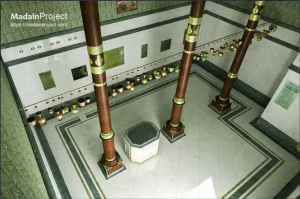
In Islamic thought, pilgrims do not undertake the Hajj simply because they choose to. They go because they have been invited. The phrase ‘invited to the House of God’ appears throughout Islamic sermons, prayers, and poetry. It expresses an understanding that the journey begins long before one boards a ship or joins a caravan—it begins with a divine call.
Muslim pilgrims entering Makkah do not feel like strangers. Rather, they feel as if they are returning home. The sacred cities are experienced as familiar, even when visited for the first time, because they are tied to stories, prayers, and memories carried across generations, and in the case of the Ka’aba and Makkah, the city they turn towards five times a day.
The dangers of travelling to make the pilgrimage were real—illness, banditry, shipwreck, famine—but even then, the pilgrim understood they were moving toward a place of sakina (tranquility), belonging, and spiritual fulfilment.
Burton, by contrast, travelled under constant fear of exposure. His journey was fuelled not by longing, but by anxiety; while Muslim pilgrims sought transformation through the Hajj, Burton sought to conquer the Hajj through knowledge.
Reversing the Western Gaze
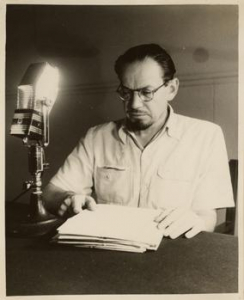
Perhaps the sharpest contrast to Burton is Leopold Weiss, the Austrian intellectual who upon conversion to Islam in 1926 became Muhammad Asad. Like Burton, Asad approached the Hajj from outside the Muslim tradition having been born a Jew — but unlike Burton, he recognised and dismantled the Western gaze.
He wrote not with triumph but with searching:
‘The urge to wander does not stem from a thirst for adventure but from a longing to find my own restful place in the world… a longing for inner discovery.’
Where Burton seeks mastery, Asad seeks meaning. Where Burton stands above the ritual, Asad allows the ritual to reshape him. Where Burton performs, Asad participates. Asad’s rihla (classical transformative Muslim journey) or Hajj narrative does not centre himself, but rather the spiritual landscape he encounters.
Madinah: A City Burton Could Not See
Nowhere does Burton’s outsider status show more clearly than in his account of Madinah. For centuries, Muslim devotional culture has overflowed with longing for the Prophet’s city, for it was Madinah that gave refuge to their Prophet when everywhere else had rejected him; it was in Madinah he built the world’s first mosque; it was in Madinah he established the first Muslim state and it was in Madinah he was laid to rest. Thus pilgrims of the past arrived at this great oasis city having memorised poems like Imam al‑Busiri’s Burdah and carried Imam al‑Jazuli’s Dalā’il al‑Khayrāt in their pockets. Illuminated manuscripts that depicted Madinah with love, reverence, and aching beauty.
But Burton, lacking this emotional and spiritual inheritance, finds the city anticlimactic. He dismisses its sacred title, al‑Madinah al‑Munawwarah (the Enlightened City), and judges the Prophet’s Mosque by its architecture rather than its aura and significance, even doubting the authenticity of the Prophet’s resting place.
From Individual Triumph to Communal Transformation
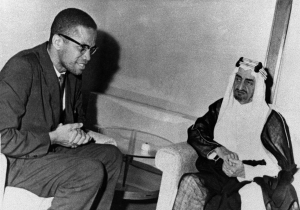
Burton’s Hajj is, ultimately, a solitary achievement—a personal victory of disguise and deception. The Muslim Hajj is the opposite: a communal experience that dissolves the ego in a sea of humanity. No modern figure expresses this better than Malcolm X, the African-American activist who converted to mainstream, Sunni Islam following his Hajj experience. After its completion in 1964, Malcolm wrote of sharing plates, beds, and prayers with Muslims whose skin was ‘the whitest of white.’ The experience shattered racial boundaries and reoriented his approach to global justice, which had previously been shaped by a white v black dichotomy.
For Malcolm, the Hajj was not an individual accomplishment—it was communion with all of humanity, and through that communion, he was literally transformed, shedding the anti-white perspective inherited through the Nation of Islam sect he belonged to prior to his conversion to mainstream Islam.
Muslim pilgrimage literature is also filled with stories of animals sensing the sacred, landscapes and responding to devotion with claims of even trees weeping with longing. The natural world therefore is not a backdrop to the Hajj; but a participant and witness. So too are ancestors.
Pilgrims often describe fulfilling the dreams of parents and grandparents who prayed for the chance to make the journey themselves. In 2024, a group of Spanish Muslims retraced a Hajj route on horseback that followed in the footsteps of their ancient Muslim ancestors of Al Andalus.
Revealing something else Burton – the solo daredevil explorer never accessed: the Hajj is not merely undertaken by an individual; it is undertaken with generations and the world around you.
The Difference Between Looking and Seeing
Burton’s Hajj narrative will always be historically significant. It shaped English‑language writing on the pilgrimage and captured a moment just before massive political upheaval in the Ottoman world. But it captured the Hajj from the outside.
By reading Burton alongside Muhammad Asad, Malcolm X, and countless unnamed Muslim pilgrims, we discover the dimensions he could never access: the deep spirituality, communal belonging, ancestral connection, and devotional imagination that define the Muslim experience of the Hajj. As the famous early 20th century aristocrat and convert to Islam (and first British female Hajji), Lady Evelyn Cobbold observed:
‘Most Western writers have not realised the importance of the Pilgrimage as a great bond and source of spiritual inspiration…’
Burton infiltrated the Hajj. Muslims are invited, and in that difference lies the distinction between a story about the Hajj and the Hajj itself.