Burton: Exploring Without Boundaries – Reflections on Navigating a Complex Legacy
By Tharik Hussain
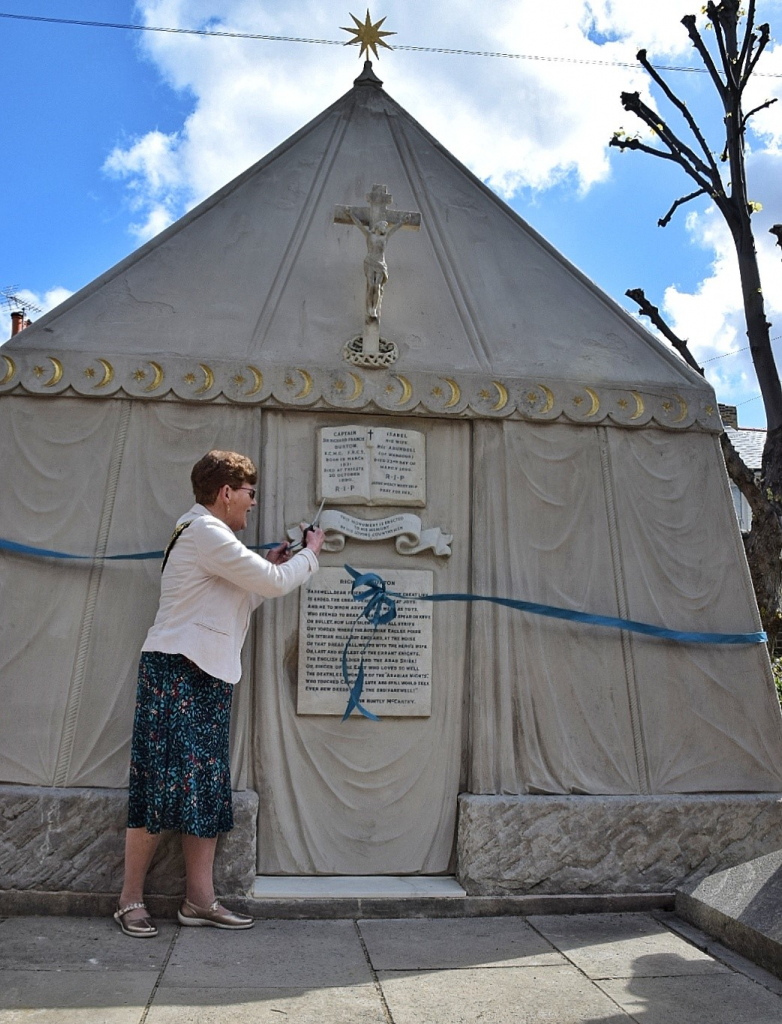
When I first joined Burton: Exploring Without Boundaries, my role was clear in principle but challenging in practice: to educate, to engage, and to reach beyond traditional audiences with the stories of the Burtons, their mausoleum, and their legacy. What was less clear at the outset was how to approach a figure as complex and contested as Richard Francis Burton in a way that was honest, inclusive, and meaningful.
I came to the project with a personal and professional interest in exploring how we might ‘decolonise’ historical figures—particularly those like Burton, whose life and work sit at the intersection of admiration and critique. On one side were those who revered Burton as a near-mythic explorer; on the other, those who viewed him as a product—and instrument—of empire, whose work, writings and actions contributed to the colonisation process and the harmful representations of cultures that still resonate today. What I quickly realised is that I needed to create spaces where both of these perspectives could coexist, the challenge would be to make them rub shoulders.
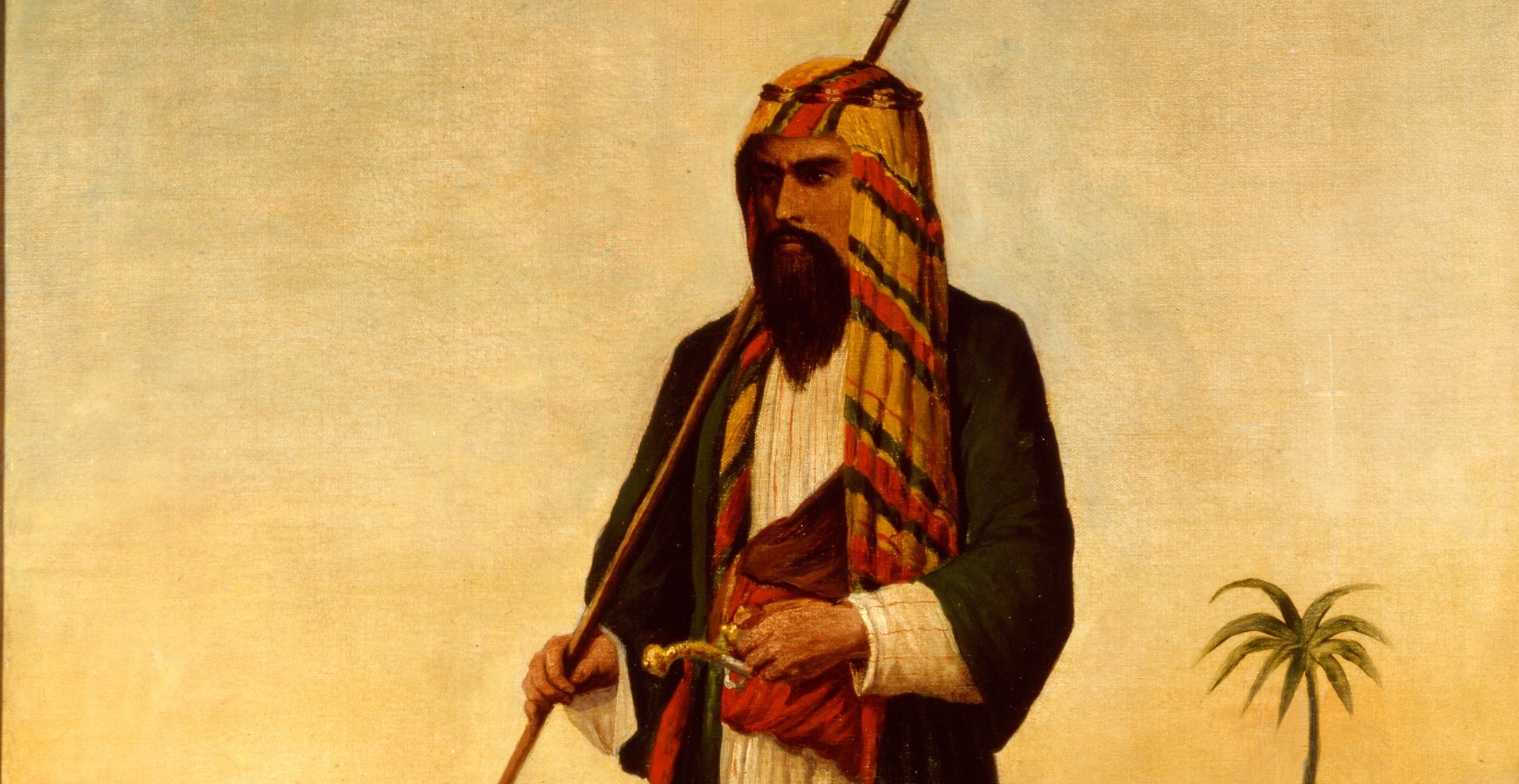
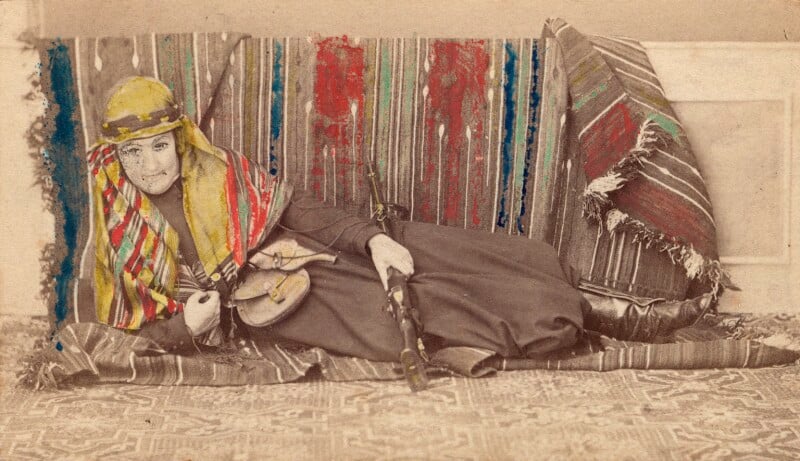
A key anchor for my work became Burton’s infamous Hajj to Makkah in Saudi Arabia – a feat that cemented his reputation as a daredevil, explorer-adventurer. But as a Muslim, I approached it differently. The Hajj is not just another pilgrimage; it is the most sacred pilgrimage of all – one Muslims believe has been commanded by God Himself – imbued with profound spiritual significance. The Hajj is in fact one of the five pillars of Islam. Thus Burton’s decision to enter this sacred space in disguise, participating in rites under false pretences, raises grave ethical questions that have historically been overlooked in favour of celebratory narratives.
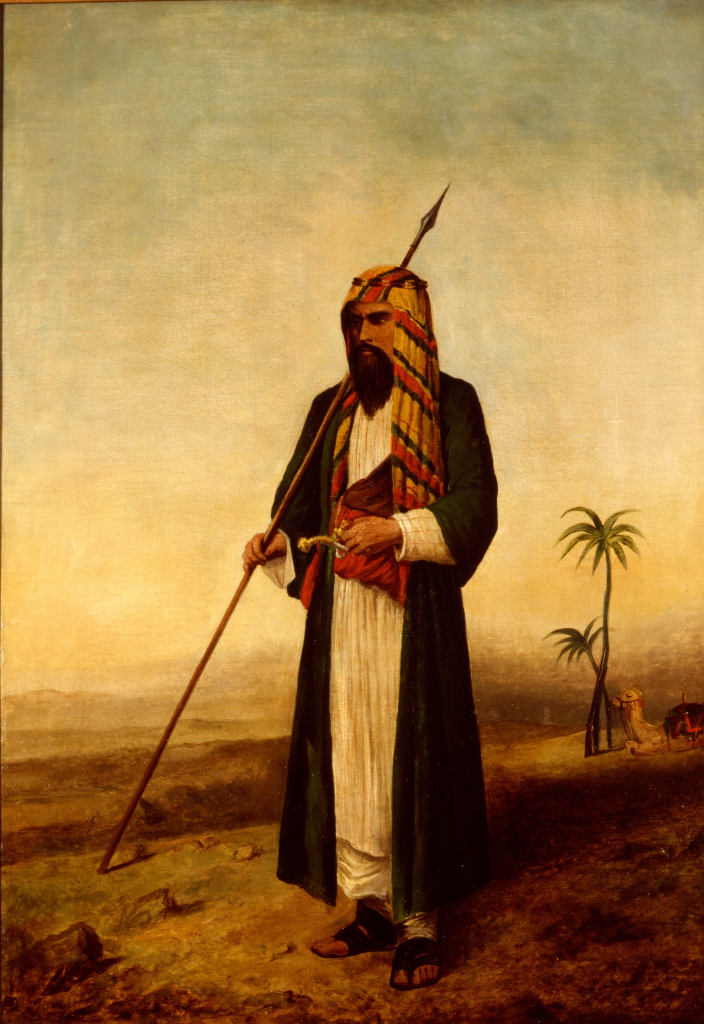
By centring this perspective in talks, educational programmes, and the documentary series we produced, we were able to gently challenge the dominant Eurocentric framing of Burton’s story. Many people we engaged with had never considered this dimension before. Yet the intention was never to condemn outright, but rather to expand understanding. We wanted to invite reflection rather than dictate the conclusions people might arrive at. At the same time, the project was equally committed to recognising the value that can be found in some of Burton’s work. Through conversations with botanists, linguists, and other specialists, we explored how his meticulous documentation of flora and certain languages continues to serve academic and scientific communities today. This approach allowed us to present a more balanced narrative: one that neither glorifies nor dismisses but instead acknowledges complexity.
This process also revealed my own blind spots. Like many others, I had spent years reading about Richard Burton, absorbing a version of his story shaped by the traditional ‘Great Man’ narrative—one that foregrounds individual achievement while obscuring the networks of support behind it. Until this project, I knew very little about Lady Isabel Burton. Her writing, her travels, and her accomplishments as an explorer and author in her own right had barely registered in my understanding. Through the extensive research carried out by my colleague, Dr Helen Brown on Isabel, that gap began to close. I came to understand that there would be no Sir Richard Francis Burton without Lady Isabel—not only as a steadfast supporter and facilitator, but also through the influence of her family connections, which helped secure the consular roles that defined much of his later career. More broadly, this also allowed us to highlight how the contributions of innumerable indigenous people who assisted Burton on his expeditions have long been overlooked. Addressing these omissions became an important part of how we reframed his story.
This spirit of re-examination was reflected in the experiences of our volunteers, whose voices became an essential part of the project’s richness. One volunteer, a self-described Burton enthusiast, shared how engaging with others transformed their own perspective:
‘The best thing that I have got out of it has been the perspective from others who were not obsessive Burtonites—or who were not at the start. I learnt from people who did not take the myth as pure fact from the start. Instead they looked at Burton’s connection to Islam and the role of his wife for example and then demonstrated how they were important parts of his life story and not just peripheral. I think that exposing some of the myth from the man gives a more informed and honest story which in the end, for me, doesn’t diminish him at all.’
This speaks directly to what we were trying to achieve: not to tear things down, but to deepen understanding by moving beyond myth and legend and bring into focus the human being behind it. Equally powerful was the contribution of volunteers who came to Burton’s story with no prior knowledge. One such volunteer, who worked on the oral history strand of the project, reflected:
‘Volunteering as an oral history interviewer on ‘Burton: Exploring Without Boundaries’ was a deeply rewarding experience, highlighting not only the richness of the stories shared but also the importance of capturing and valuing perspectives from across different communities.’
This emphasis on multiple perspectives became central to everything we did. Over the course of two years, we had the privilege of engaging with a remarkably diverse range of people: primary school children encountering Burton’s story for the first time; elderly members of South Asian communities reflecting on how figures like Burton intersect with their histories; and passionate Burton enthusiasts eager to share their knowledge. Through workshops, outreach sessions, community events and a wide-ranging oral history project, we created spaces for dialogue—sometimes challenging, often enlightening, and always necessary. What became clear is that engaging with complex histories cannot be rushed. It requires time, patience, and above all, trust.
There were moments when conversations felt difficult. Discussions about empire, representation, and cultural appropriation are rarely straightforward. Yet these were also the moments where the most meaningful learning occurred. People began to see that it is possible to hold two seemingly opposing ideas at once: that Richard Burton could be both a figure of remarkable achievement and one whose actions contributed to harm. In an increasingly polarised world, those moments felt particularly important.
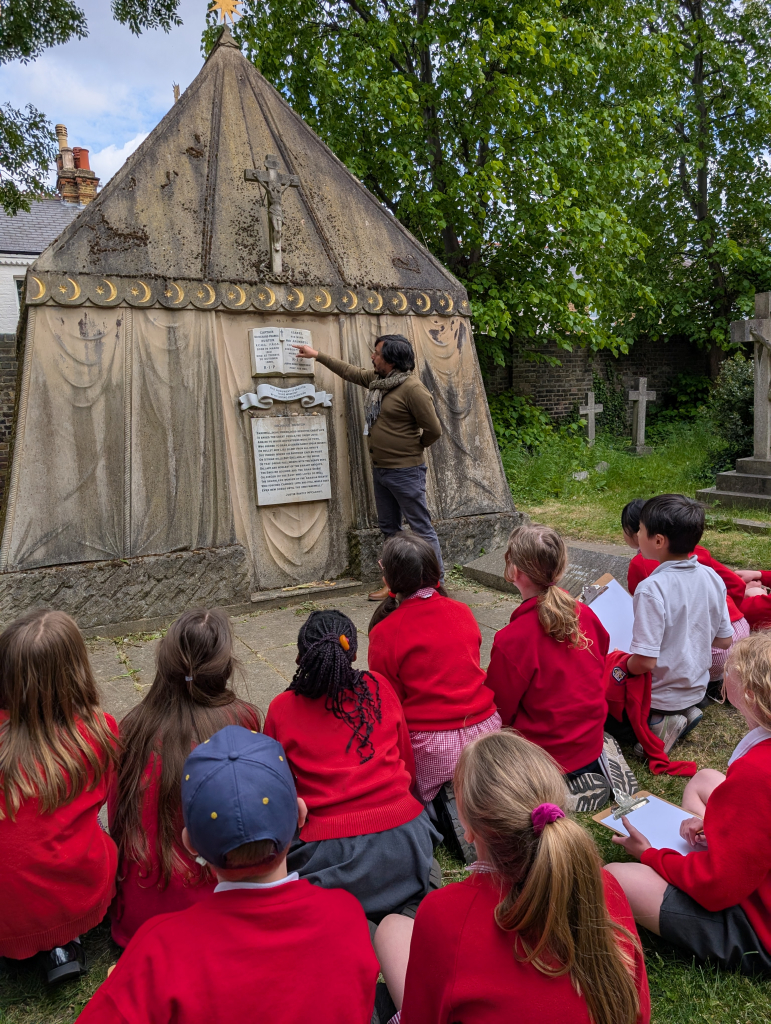
One of the most valuable things this project allowed us to reinforce is that nuance is essential. Simplified narratives—whether wholly celebratory or entirely critical—may be easier to communicate, but they rarely do justice to the complexities of history. By contrast, embracing nuance allows us to engage more honestly with the past and, in turn, with each other. Being allowed the time to produce a three-part documentary series, research and deliver talks on Burton and his fascinating relationship with Islam, develop a varied educational program, conduct outreach across diverse communities, and carry out oral history research all deepened my understanding—not just of Burton, but of how we tell stories about the past.
If there is one thing I have learned, it is that this work must be done gently. Challenging established narratives, particularly those tied to identity and heritage, requires sensitivity. It requires listening and learning as much as speaking. And it requires a willingness to sit with discomfort.
Burton: Exploring Without Boundaries was never just about Richard, Isabel and their mausoleum. It was about how we engage with history itself – how we question it, reinterpret it, and share it in ways that are inclusive and meaningful. It showed that by bringing together a wide range of voices and perspectives, we can move closer to stories that are not only more accurate, but also more human. And perhaps that is the most important takeaway of all.